
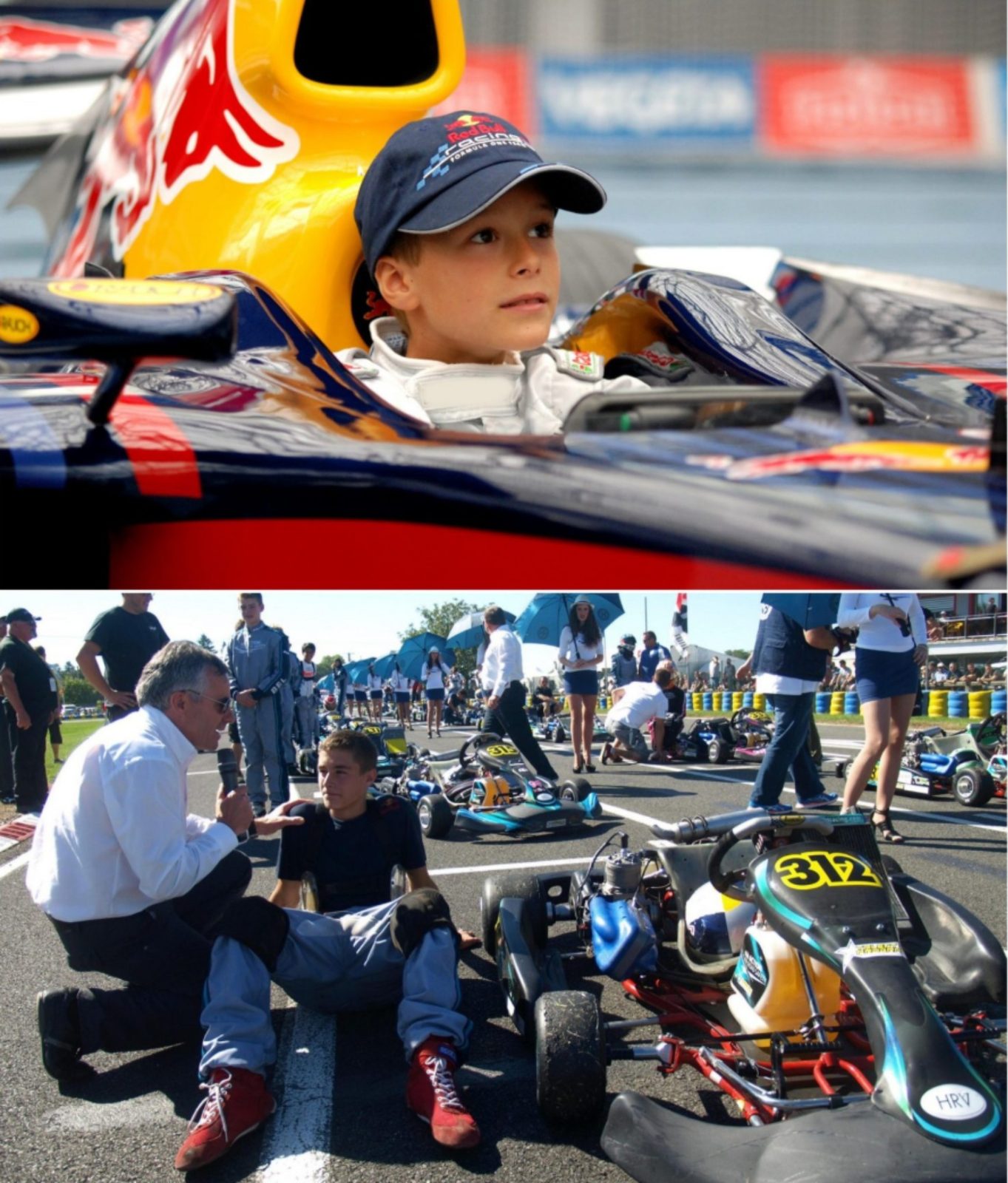
In karting, talent often shows early. Sometimes, already at age five, you notice something special: the child feels the steering wheel, instinctively searches for the ideal line, has natural courage, and—most importantly—has the will to compete.
When you spot talent at age 5, the biggest risk is burning out a child before they reach their potential. Here’s how to build a real winner in karting the right way.
What decides whether that spark becomes a fire—or goes out—is the system, patience, and an approach that changes as the child grows.
Children Change—The Coach Must Change Even Faster
The biggest mistake I’ve seen over the years is the assumption that a child stays the “same” from season to season. They don’t.
Children change:
- physically (growth, coordination, strength, fatigue)
- mentally (attention, confidence, stress tolerance)
- emotionally (motivation, fear, frustration, “bad days”)
- in character and personality (the competitive “wolf,” the quiet perfectionist, the cheerful explorer…)
A coach who uses the same method with the same child for years is actually working with a past version of that child.
That’s why the key is: adapting the working methods to the child’s personality and their current development phase—and doing it in cooperation with the parents.
Not so the child “wins faster,” but so they grow and develop in a healthy way—physically and mentally.
Pressure Kills a Career Before It Even Starts
I’ve watched many talents who had everything: speed, courage, a strong head. And then… too much parental pressure, impatient coaches, too much training, too many expectations, too little rest.
The result?
- the career dies out before it truly begins
- the child still drives, but without fire
- the potential stays unused
- they “turn laps” instead of progressing
The most dangerous thing is overpushing.
When we overtrain a child, something sneaky often happens: not only do they not improve, they start to confirm mistakes. Fatigue and stress cement bad habits. And then you get the paradox: the child trains more, but drives worse.
A Holistic Approach: First the Human, Then the Driver
As a coach, I work holistically. Because driving isn’t just “technique”—driving is the state of the body and the mind.
That’s why the order must look like this:
- Sleep (quality and routine)
- Nutrition and hydration (stable energy, recovery)
- Rest and relaxation (so the nervous system isn’t stuck in the red)
- Mental exercises (focus, breathing, pre-track routine)
- Only then: driving technique and performance
When a child is tired, poorly fed, stressed, and without mental safety—you can talk about the apex all you want. It won’t land.
Gradual Growth: Kaizen in Karting
What I stand for is gradual growth—the “Japanese system”: Kaizen.
That means:
- small steps every training day
- one clear goal per session
- progress built like a brick wall, not like fireworks
A Kaizen example in practice:
- today: fix only vision (where you look in the corner)
- tomorrow: only one braking point
- next time: only the exit of corner 3
- and so on…
That is stable. That lasts. That builds confidence.
Kids Need to Normalize Imperfection
One more thing I intentionally teach children:
not everything is perfect all the time.
You don’t have to be the fastest every day. You don’t have to “destroy it” in every practice. You don’t have to constantly prove you’re worth something.
Because sport is real life:
- sometimes you’re tired
- sometimes you’re in a bad mood
- sometimes something bothers you
- sometimes it’s simply “not your day”
And here’s an important principle:
If the child isn’t in the mood that day—give them a small task
You don’t push them into “war.” You don’t create drama. You don’t create trauma.
You say:
“Do one small task and that’s enough.”
That task can be:
- 5 laps focusing on one thing
- one good start
- one good corner exit
- one mental routine before going out
The child goes home with the feeling: “I wasn’t perfect, but I did something good.”
That’s mental resilience. That’s a long-term athlete.
The Parent’s Role: Partnership, Not Commanding
Parents are crucial. And that’s why the cooperation must be clean and healthy.
A parent doesn’t have to know driving technique—but they must know this:
- the child is not an ego project
- success is not urgent, it’s long-term
- motivation is protected, not squeezed dry
- the child must feel safety, not fear
When the parent and the coach work together, with the same goal—healthy growth and development—the child gets the best possible foundation.
Conclusion: Talent Is a Gift, but the System Is a Decision
When you recognize talent at age five, you must not “squeeze” it so it matures faster. You must protect it, guide it, and build it.
Karting is not a sprint. Karting is a marathon in which the child grows up, changes, searches for themselves. And our job—as coaches and parents—is that through that process the child remains:
- healthy
- motivated
- mentally stable
- and ready to turn talent into results when the time comes
Because the goal is not only for the child to drive fast.
The goal is for the child to love driving long enough to even reach their maximum.