
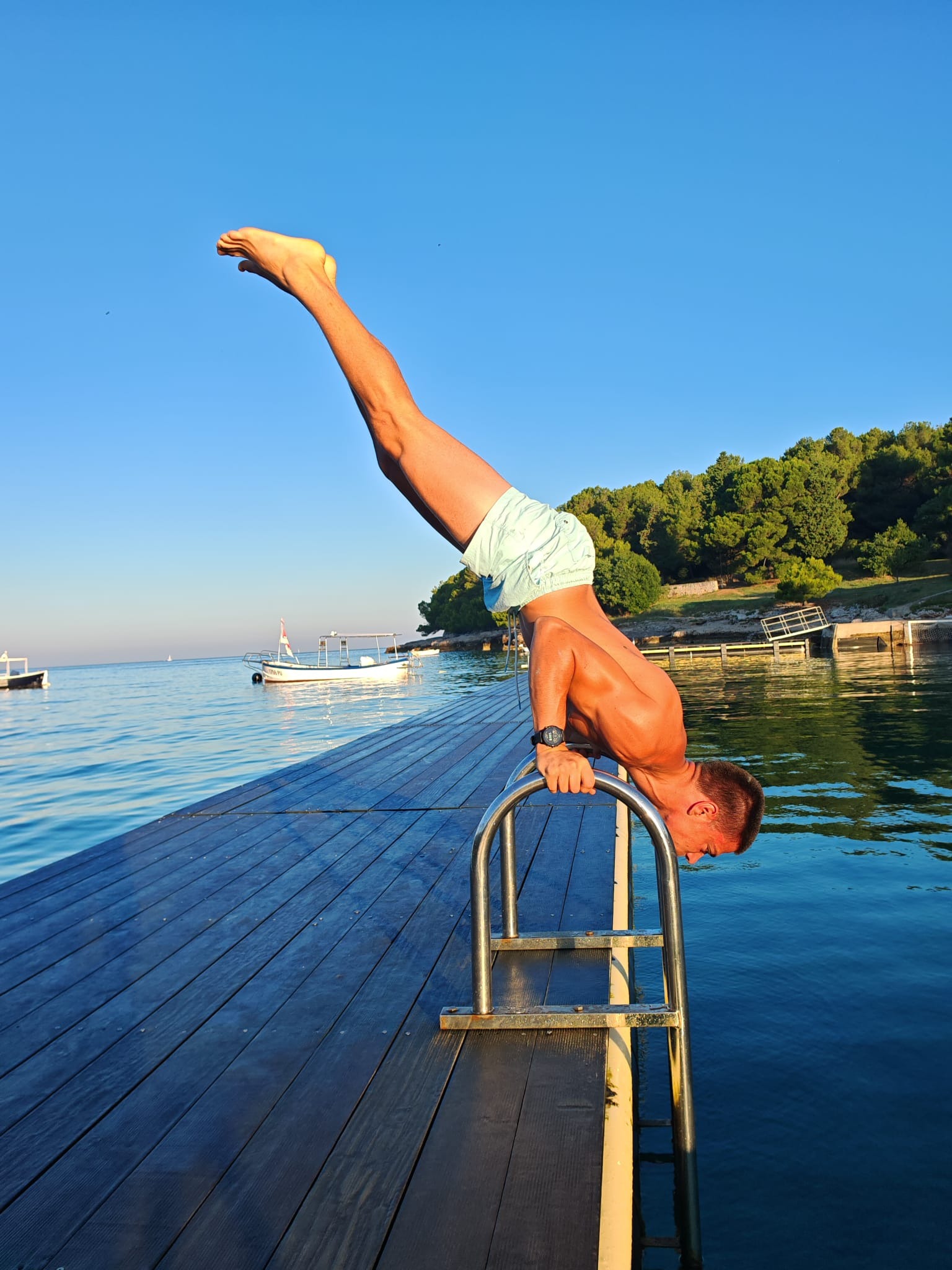
You can buy an engine. You can buy a chassis. You can pay for the best team, the best mechanic, and a top-level coach — but you cannot buy health, endurance, and true fitness.
Those are “purchased” with only one currency: discipline and consistency.
And here’s the key: you still do the work when motivation is missing. Motivation is a bonus. Habits are the foundation.
Karting Isn’t “Just Sitting”: What the Sport Really Demands
Karting may look simple from the outside, but physiologically it can be demanding. Under race stress, a driver’s heart rate rises, and the act of driving loads the musculoskeletal system (especially grip/forearms) and challenges thermoregulation.
For parents and young drivers, the takeaway is simple:
Equipment helps — but the body is the platform.
If the platform isn’t ready, everything else becomes a compromise.
Long-Term Development in Kids: What Science Actually Supports
When we talk about children (roughly ages 10–14), the most important thing to understand is this:
The goal is not to “build a little bodybuilder.”
The goal is to build an athletic foundation:
- coordination
- agility
- mobility
- basic strength
- movement control
Long-term athlete development principles emphasize fundamental movement skills, gradual loading, variety, injury prevention, and a long-term approach.
One more important point: strength training for kids is not automatically dangerous or “forbidden.” With proper technique, supervision, and appropriate progression, it can be safe and beneficial.
In other words, the real question isn’t “weights yes/no” — it’s how, when, and how much.
My Practical Model: Micro-Workouts Every Day (and Why It Works)
This is the structure I used with Aleksandar:
10 minutes in the morning
15 minutes in the afternoon
Short. No drama. No “destroying” the kid.
But every day.
With kids and young athletes, consistency beats extremes. Micro-workouts are brutally effective because they:
- don’t create mental resistance (“it’s too much”)
- fit school and daily life easily
- build identity (“I’m someone who trains”)
- allow progress without sudden spikes in load
What We Did at Age 11: No Weights, No Stressful Training — Just Quality
When Aleksandar was 11, I monitored his growth and development and adjusted training systematically. The focus was:
- agility
- motor skills
- coordination
- mobility
- core control and stability
- posture and symmetry
This aligns with long-term development logic: movement quality first, capacity second.
Over time, we built a body that wasn’t “pumped,” but functional — ready for karting, and honestly ready for almost any sport.
Example Micro-Workout Structure (Karting-Relevant and Youth-Safe)
Morning (10 min) — “Switch the body on”
- 2 min mobility (hips / ankles / thoracic spine)
- 3 min coordination (footwork, fast direction changes, ladder drills without the ladder)
- 3 min core/stability (dead bug, side plank variations)
- 2 min breathing + posture reset
Afternoon (15 min) — “Capacity + control”
- 3 min warm-up (skipping, light jumping jacks)
- 6 min circuit (3 exercises × 2 rounds)
- chair squat / split squat (controlled)
- incline push-ups / scapular control
- farmer’s hold with light load / isometric grip
- 4 min agility/reaction (visual cues, quick changes of direction)
- 2 min stretching + quick check-in (“how do you feel?”)
The Biggest Parent Mistake: Thinking “Now and Fast”
Parents often want results in four weeks. In youth development, that mindset leads to:
- disappointment
- injuries
- burnout
- overtraining
The long game wins. Always.
When “Hard Work” Becomes Too Much: Why I Sometimes Have to Limit Training Now
Here’s the paradox: when a kid builds real habits and starts seeing progress, they often want more.
That’s great — but the coach must sometimes become the brake. Development isn’t a straight line. The body grows, the nervous system matures, school stress exists, and karting itself adds load.
Practical red flags:
- constant fatigue / poor sleep
- performance drop
- irritability, “heavy head” feeling
- loss of drive (not laziness — often a burnout signal)
Mental Strength and Confidence Come as a Side Effect
Parents often think physical preparation is “only about the body.” It isn’t.
When a child:
- trains even when they don’t feel like it,
- becomes more stable, faster, more coordinated,
- feels control over their own body,
…that directly builds confidence and mental resilience.
In karting, that’s gold: calm under pressure, focus, routine, execution.
Message to Parents: Be Patient and Think in Years, Not Weeks
If I had to reduce this to one sentence, it would be this:
You’re not only training a karting driver — you’re building habits that last a lifetime.